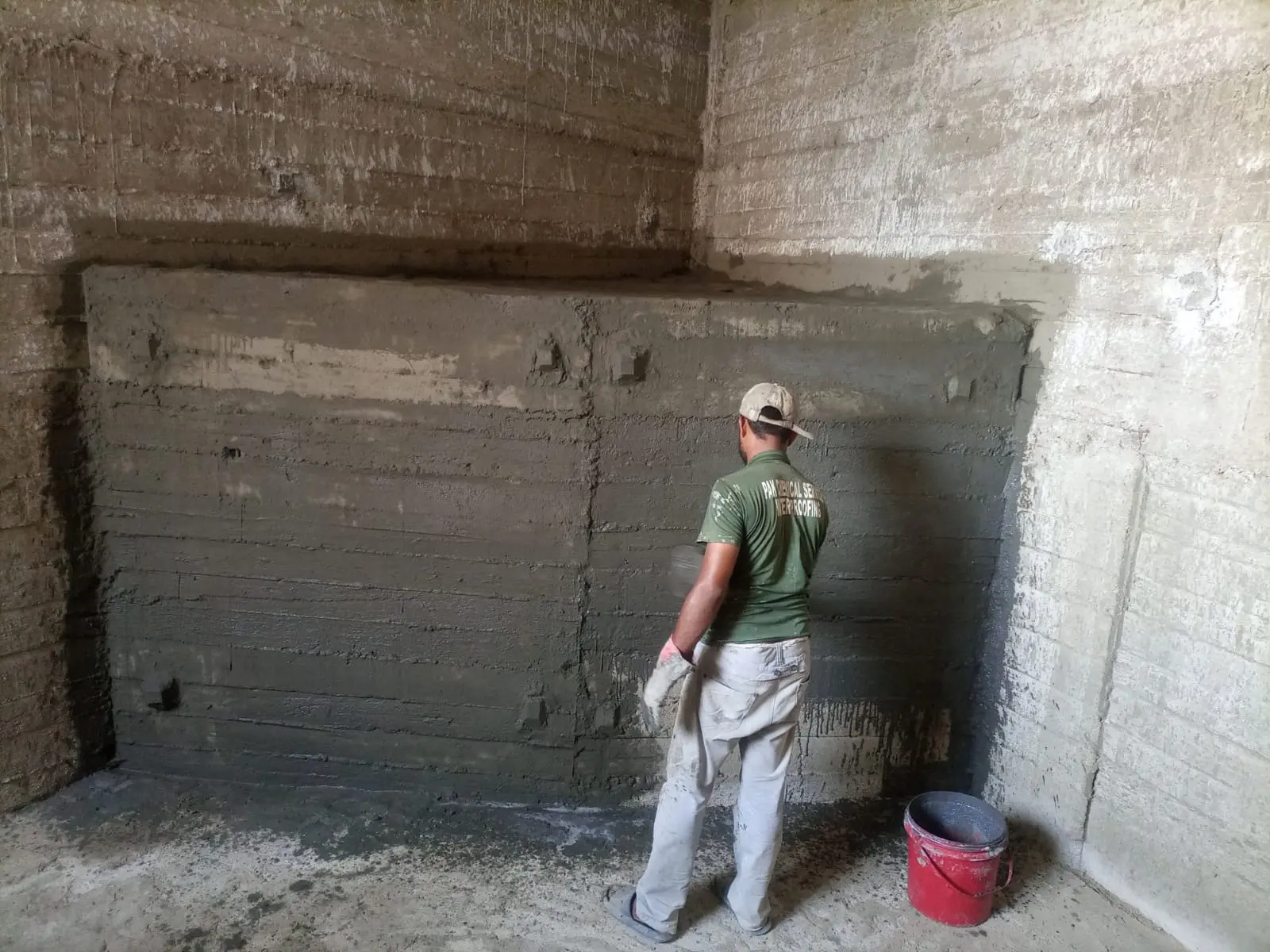
Roof Slabs
Review slab surfaces, construction joints, parapet junctions, pipe penetrations, drains, cracks and service openings before finalizing the system.
Inspection-led waterproofing for selected roof slabs, basements, concrete tanks, construction joints and service penetrations before finishes.
Waterproofing during the gray-structure stage allows leakage-prone areas to be treated before tiles, plaster, paint and ceilings are installed. Pak Chemical Services assesses construction drawings, stage, substrate condition, joints, penetrations, intended use, access and expected water exposure before recommending treatment.
Gray structure waterproofing is not one identical coating for an entire building. Each area needs a scope suited to its function and actual moisture conditions.
Relevant concrete surfaces are easier to inspect and prepare before tiles, plaster, ceilings and other finishes conceal them. Planning Gray Structure Waterproofing in Karachi during construction can reduce disruptive access through completed finishes, while still matching each area to its exposure and intended function.
Final scope depends on drawings, construction stage, substrate condition, intended use, water exposure and access.
Review slab surfaces, construction joints, parapet junctions, pipe penetrations, drains, cracks and service openings before finalizing the system.
Consider retaining walls, floor slabs, wall-floor junctions, construction joints, sleeves and accessible external surfaces before backfilling.
Inspect internal walls, floors, junctions, joints, inlet, outlet and overflow penetrations. Material suitability must match the tank’s intended use.
Separate concrete pours at slabs, walls, basements and tanks can create moisture pathways; treatment depends on joint design, movement and exposure.
Coordinate water pipes, drains, conduits, sleeves and mechanical services before finishes conceal access. Defective plumbing needs separate correction.
Include other surfaces only when drawings, intended use, exposure, substrate condition and finishing sequence show a genuine waterproofing need.
Waterproofing should be coordinated with the site team and subsequent trades. Timing affects accessibility, preparation, joint treatment, penetration sealing, integration with finishes, system protection and later construction activity. Drilling or cutting after application can damage completed treatment.
These conditions require assessment; they do not automatically justify one standard coating.
The approved sequence is adapted to each location, exposure and construction stage.
Review which roof slabs, basements, tanks, joints, penetrations and other approved concrete surfaces are accessible. Consider drawings and planned finishes where available.
Check cracks, loose material, honeycombing, weak repairs, joints, contamination, penetrations, damaged edges and existing moisture.
Select treatment by area function, exposure direction, surface condition, water pressure, accessibility, expected movement, intended use and planned finishes.
Clean concrete, remove loose or incompatible material, prepare cracks, repair defective concrete, and prepare joints, junctions and service penetrations.
Treat suitable stable cracks, construction joints, wall-floor junctions, penetration edges and local defects. Moving structural cracks may require qualified structural assessment.
Apply the approved system according to surface, location, exposure, product requirements, coats, reinforcement details and construction stage.
Follow material-specific curing based on temperature, humidity, substrate, coat count and thickness. Protect completed work from later drilling, cutting or trade damage.
Review coverage, joints, penetration sealing, visible defects, damage and areas affected by later work. Test only where practical and appropriate.
Selected areas should be treated before floor or wall tiles, plaster, paint, screed, ceiling finishes, cladding and other architectural layers make substrate access disruptive. Treatment must still follow the actual construction sequence and manufacturer requirements rather than being applied as early as possible without coordination.
Houses, villas, apartment buildings, residential blocks and multi-storey properties may require treatment at roof slabs, basements, concrete tanks, joints and penetrations. The final scope should be based on project requirements rather than waterproofing every surface automatically.
Suitable projects may include commercial buildings, offices, warehouses, factories, educational buildings, healthcare facilities and other concrete structures. Larger projects require coordination with schedules, access, contractors, MEP services, structural work and finishing trades so completed waterproofing is not damaged.
Inspection-led treatment can improve access and coordination, but it does not guarantee zero future leakage, lifetime protection or structural strengthening.
Cost depends on treatment area, number of locations, roof slabs, basements, tanks, joints, penetrations, surface condition, concrete repairs, access, selected system, applicable coats, preparation, protection, scheduling and appropriate testing. Similar-size buildings can have different scopes, so a site review is more reliable than a universal square-foot rate.
Pak Chemical Services follows an inspection-led approach to Gray Structure Waterproofing in Karachi: review the construction stage; inspect exposed concrete; identify leakage-prone locations; assess cracks, joints and penetrations; define preparation; select treatment by intended use; coordinate work before finishes; follow material-specific application and curing requirements; and complete a final inspection.
Project owners or contractors can share the property location, construction-stage photos, drawings where available, areas requiring treatment, approximate area and schedule through WhatsApp. Physical inspection may still be required.
Explore relevant PCS services or request a site inspection.
It is treatment of relevant leakage-prone concrete areas during construction before final tiles, plaster, paint and other finishes are completed.
Depending on the project, relevant areas can include roof slabs, basements, concrete tanks, construction joints, service penetrations and other moisture-sensitive concrete surfaces.
No. Scope depends on drawings, substrate condition, intended use and expected water exposure of each area.
The correct stage depends on the area, selected system and construction sequence. Treatment should be coordinated before relevant surfaces become inaccessible or covered.
Relevant cracks and defects should be inspected and treated where required before or as part of the system. Major or moving structural cracks may need separate assessment.
Construction joints can become moisture pathways if not detailed or treated appropriately. Treatment depends on location, joint type and expected movement.
Relevant penetrations can be included where appropriate, but defective plumbing itself requires separate correction.
It can often be coordinated effectively while external and internal concrete surfaces remain accessible. The method depends on site conditions and exposure.
Yes, concrete tanks can be included at an appropriate construction stage. The selected system must suit the tank’s intended use.
Duration depends on total area, number of locations, repairs, selected materials, access and curing requirements.
Cost depends on treatment area, roof slabs, basements, tanks, joints, penetrations, preparation and selected systems.
Yes. Site inspection and review of relevant construction areas help define the scope before quotation.
Waterproofing selected concrete areas during construction allows critical joints, penetrations, roof slabs, basements and tanks to be treated while accessible.
Contact Pak Chemical Services for professional Gray Structure Waterproofing in Karachi. Share the project location, construction stage, photographs, available drawings, treatment areas and approximate area to request an inspection and quotation.