☎ Call Now: +40 2344 9000

◷ Available: Mon. – Fri 12am to 12pm

GALVANIZED METAL ROOF LEAKAGE CONTROL

GI Sheets Waterproofing Services in Karachi

Inspection-led waterproofing for GI sheet roofs on factories, warehouses, workshops, sheds and commercial structures.

GI sheet roofs are lightweight and practical, but rainwater can enter through sheet overlaps, loose fasteners, corroded sections, damaged sealants and service penetrations. Pak Chemical Services provides professional GI Sheets Waterproofing Services in Karachi for roofs affected by leakage, rust, failed joints and deteriorated protective coatings.

Unlike RCC roofs, galvanized iron sheets expand and contract with temperature changes. We inspect the complete roof—overlaps, screws, washers, ridges, roof edges, penetrations, corrosion and previous repairs—before recommending localized repair or broader waterproofing.

• PROFESSIONAL INSPECTION

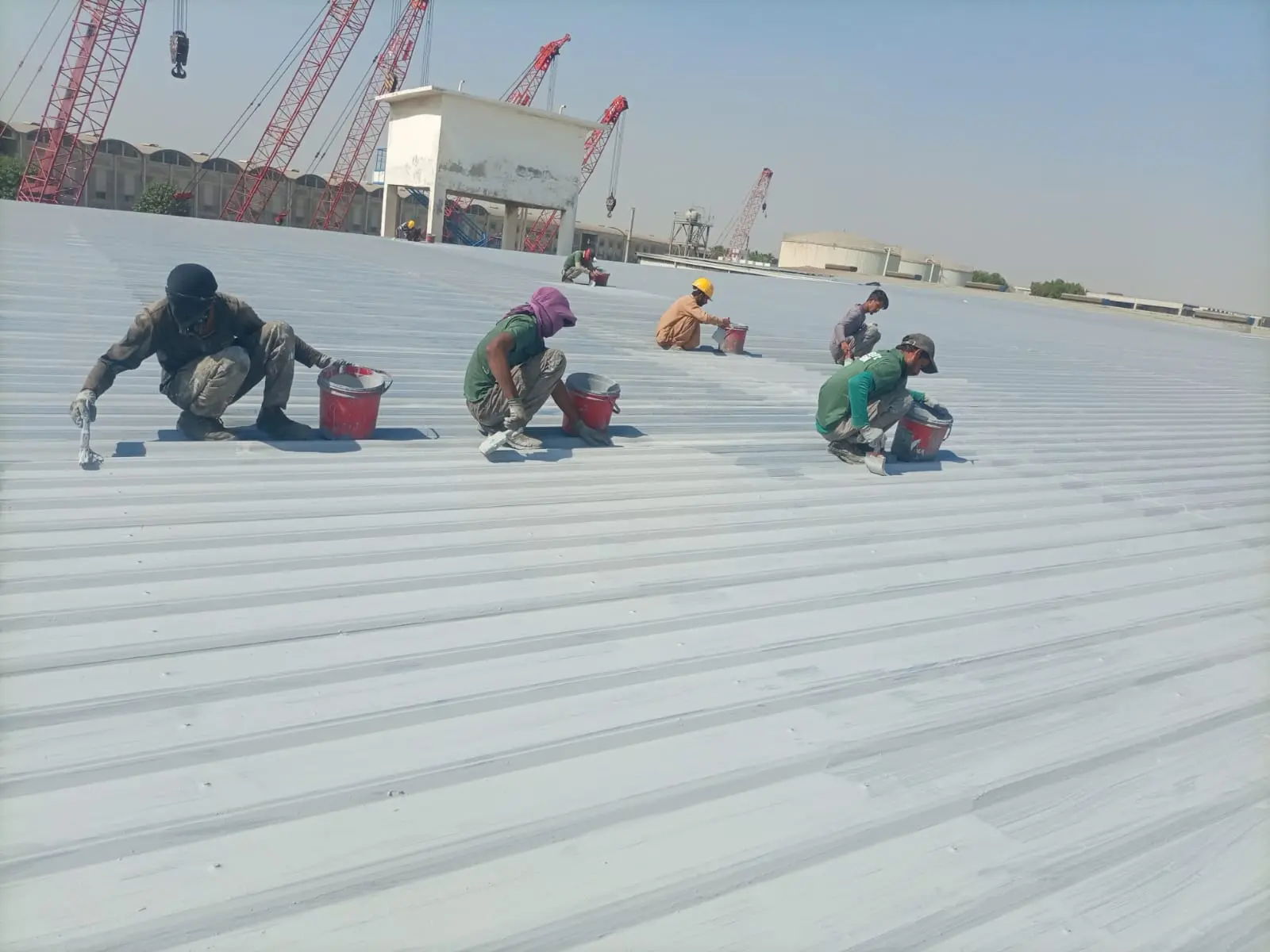
Professional GI Sheet Roof Leakage Inspection and Waterproofing

Professional GI Sheets Waterproofing Services in Karachi starts by identifying where rainwater is actually entering. A visible drip may not be directly below the defect because water can travel along the underside of a sheet, purlin or overlap before appearing inside.

  • ✓ Sheet overlaps
  • ✓ Side laps and end laps
  • ✓ Ridge joints
  • ✓ Fasteners and screws
  • ✓ Washers
  • ✓ Roof edges
  • ✓ Flashing and corners
  • ✓ Service penetrations
  • ✓ Vent openings
  • ✓ Air-conditioning lines
  • ✓ Previous repair patches
  • ✓ Rusted sections
  • ✓ Damaged protective coatings

The objective is to treat the actual leakage source rather than patching the internal ceiling or coating unprepared metal.

• WARNING SIGNS

Common Signs of GI Sheet Roof Leakage

GI sheet roof problems often become noticeable during rainfall or shortly afterward. Large industrial roofs can have several leakage points at the same time.

✓ Water dripping inside✓ Wet ceiling panels✓ Damp insulation✓ Water stains on walls✓ Rust marks below roof✓ Leakage around screws✓ Moisture below overlaps✓ Water around ridges✓ Leakage near vents✓ Dampness around AC lines✓ Peeling roof coating✓ Loose or cracked sealant✓ External corrosion✓ Failed previous patches✓ Water from roof edges
• LEAKAGE SOURCES

What Causes GI Sheet Roof Leakage?

Open Sheet Overlaps

Movement, failed sealant, corrosion, poor alignment, damaged fasteners or previous repairs can open overlapping sheet edges. Overlaps should be inspected before broader coating.

Loose or Damaged Fasteners

Screws can loosen, washers deteriorate, holes enlarge and sealant fail as sheets move. Sound sheets may only need localized fastener treatment.

Rust and Corrosion

Failed paint, trapped water, corroded fasteners, exposed edges and scratches can create rust. Loose corrosion must be removed before treatment can bond properly.

Ridge Leakage

Loose, corroded, poorly overlapped or movement-damaged ridge caps can admit water that travels far before dripping inside the building.

Roof Edge and Flashing Defects

Damaged flashing, open edge joints, deteriorated sealant, movement and failed patches need detailed joint treatment rather than coating only the centre of a sheet.

Service Penetrations

Exhaust ducts, ventilation, AC lines, conduits, cable trays, pipes and skylights can leak when their sealing fails. The service itself must also be checked.

Damaged Previous Coating

Old coatings can peel, crack, become brittle, separate from metal, wear away at joints or trap moisture. Surface compatibility and adhesion must be assessed first.

• METAL ROOF REQUIREMENTS

GI Sheet Roof Waterproofing

GI sheet roofing behaves differently from concrete. Metal expands and contracts with temperature changes, and its joints experience movement. Professional treatment must consider the metal substrate, sheet profile, fasteners, overlaps, ridge joints, existing paint, corrosion, drainage, penetrations and prior repairs. Rigid filling material may crack where movement continues, so the system must suit both the metal and the joint.

• INDUSTRIAL ROOFS

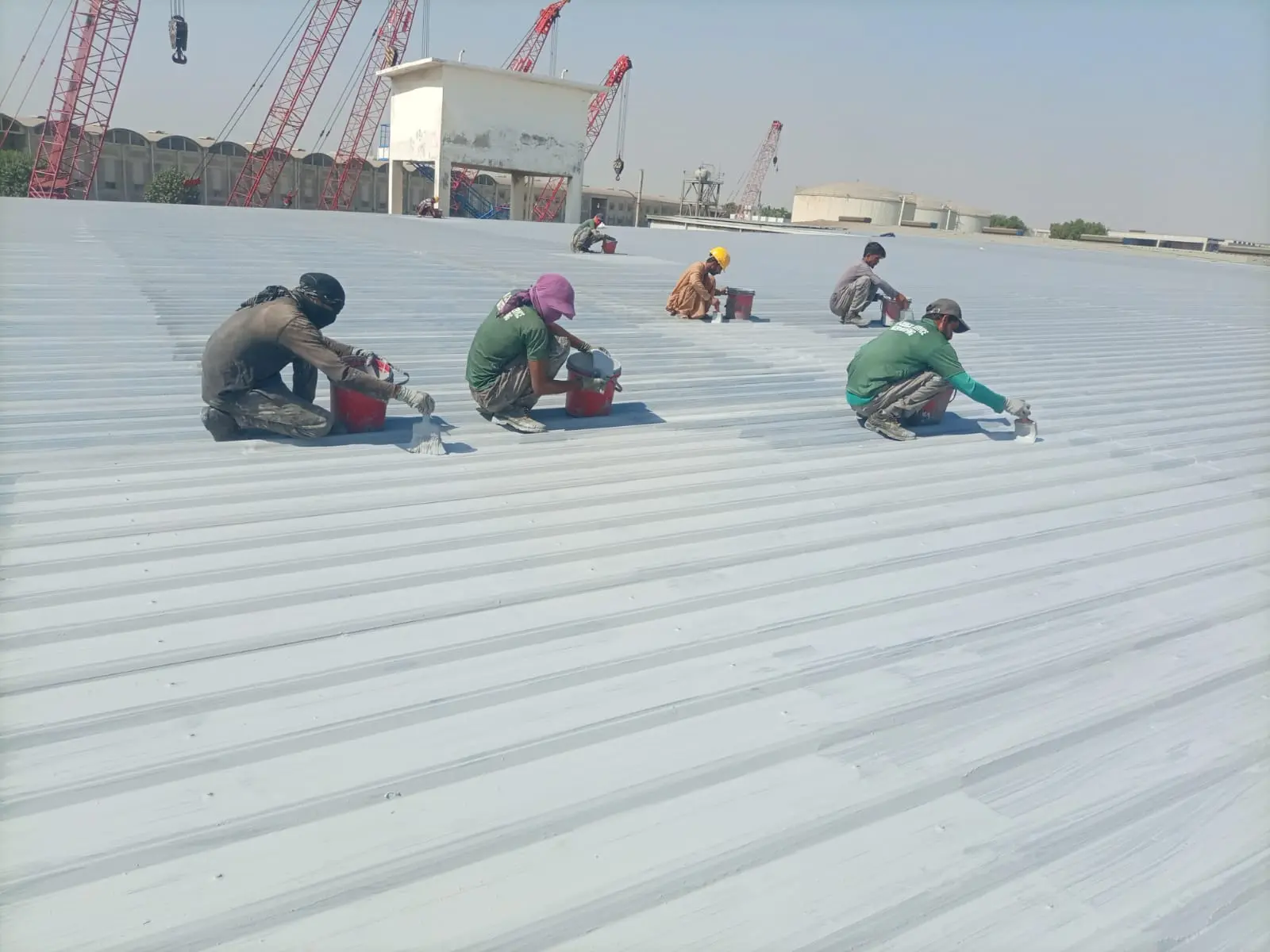
GI Sheets Waterproofing for Factories and Warehouses

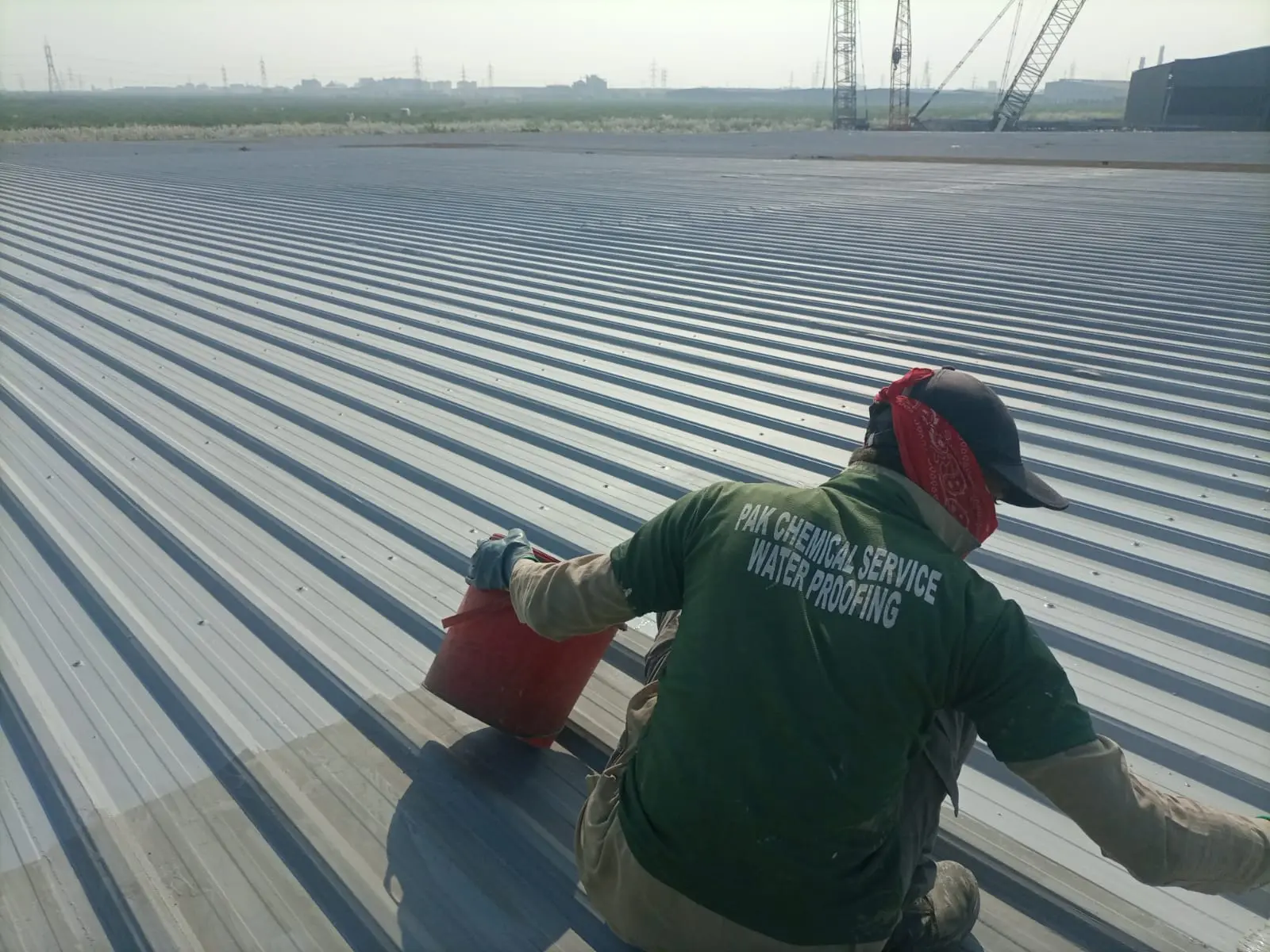
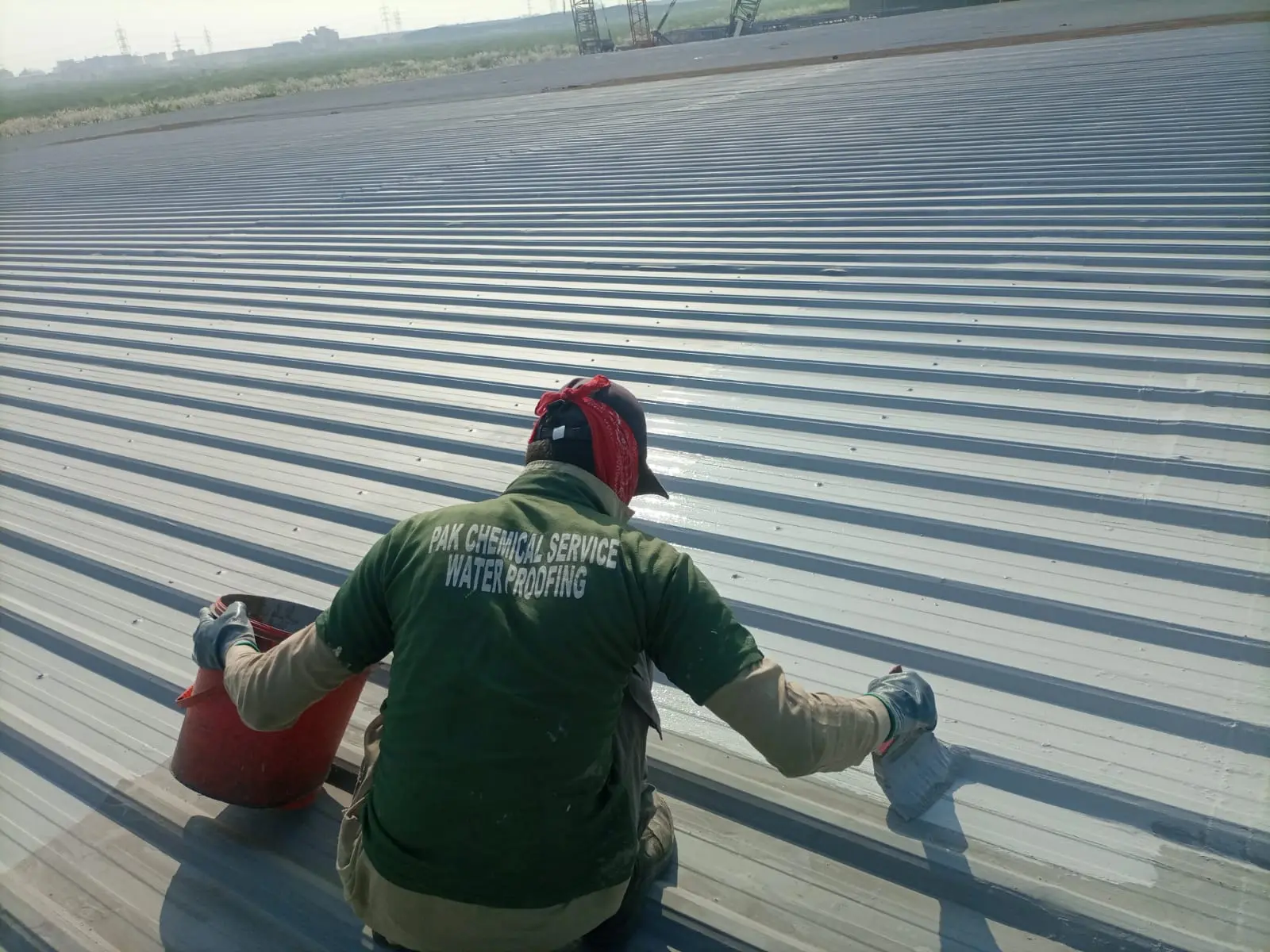
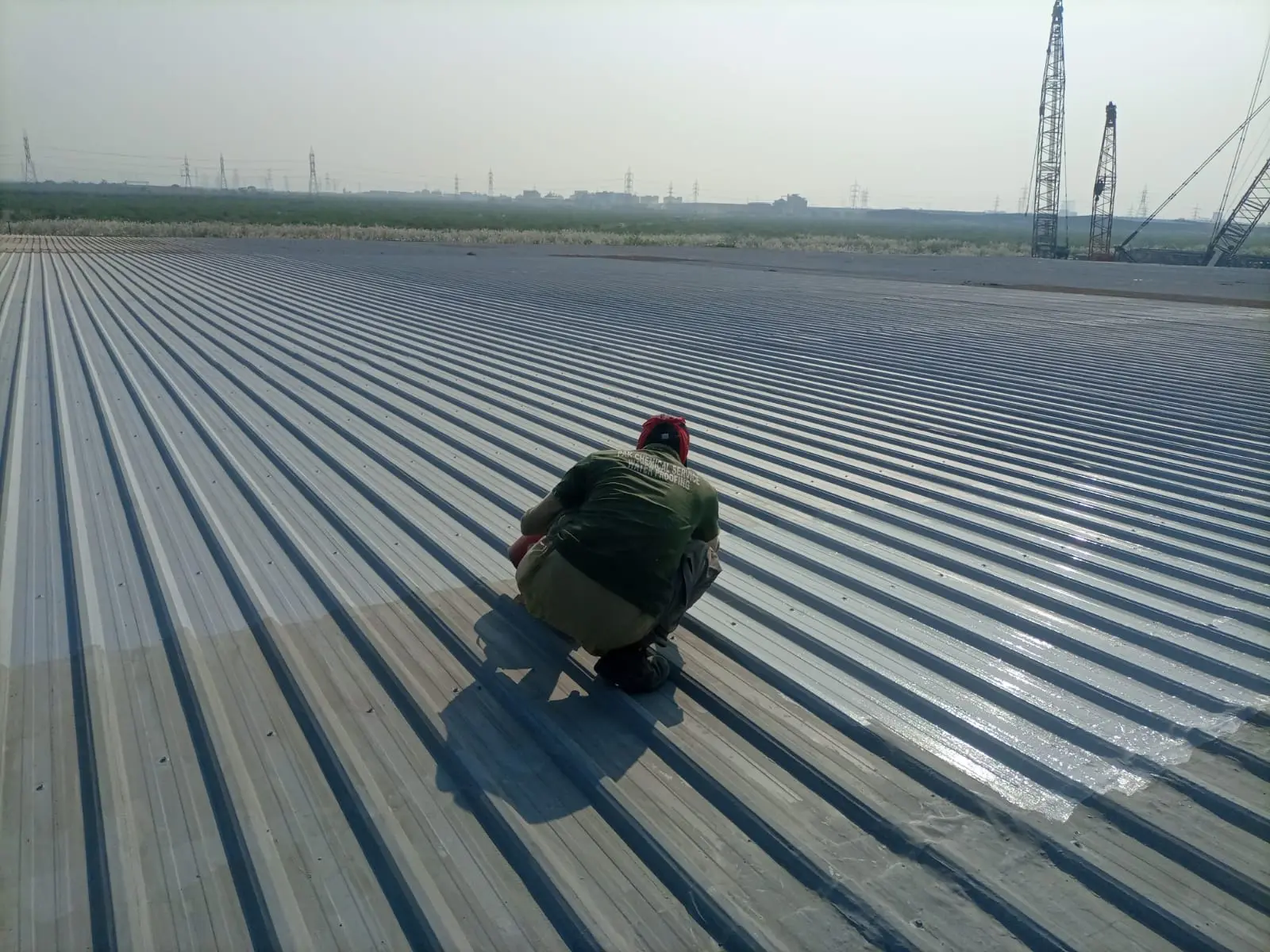
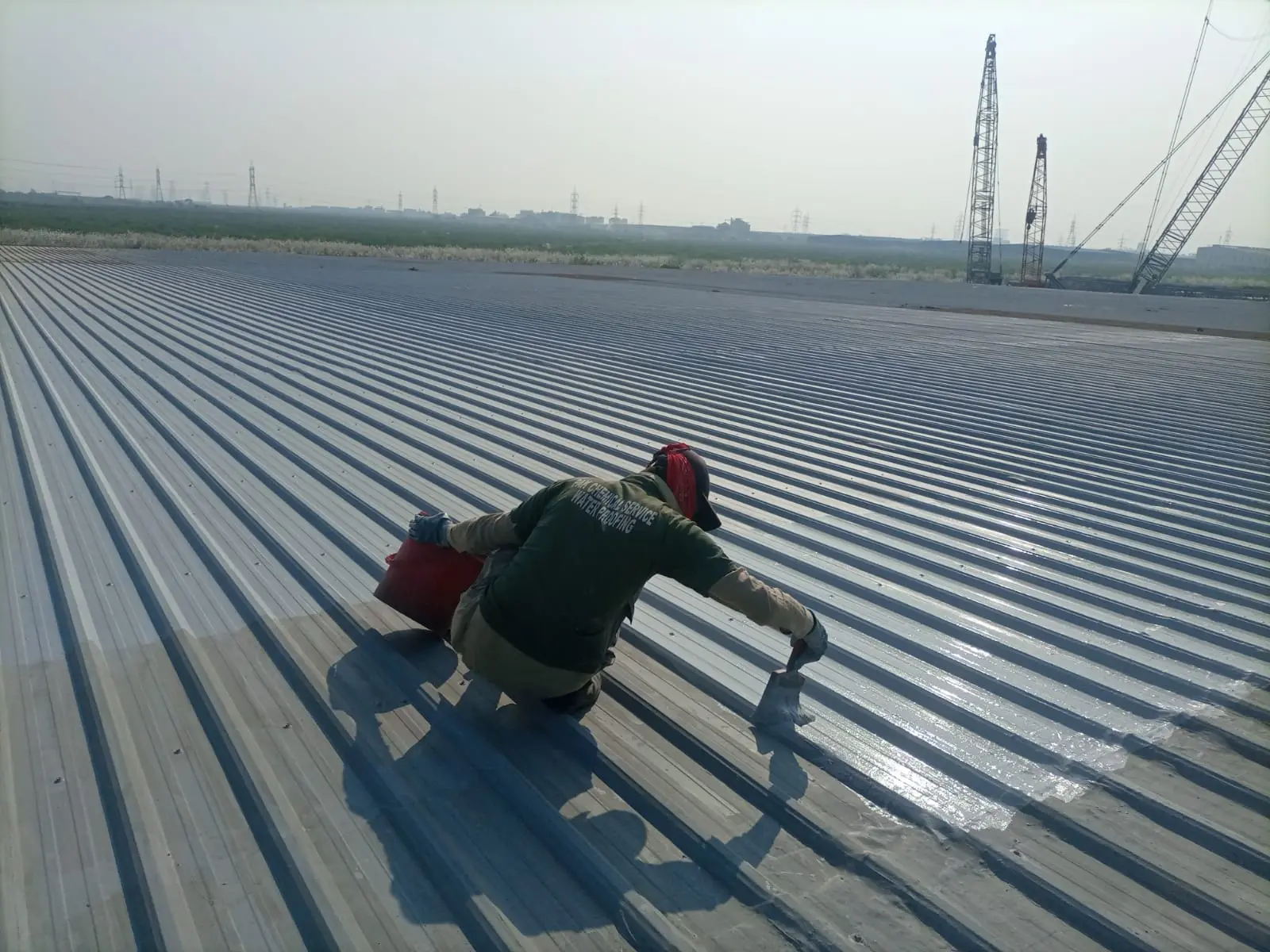
Factories and warehouses often have large roofs with numerous joints, fasteners, exhausts, vents, skylights, cable penetrations and ridge caps. Water entry can affect machinery, raw materials, finished goods, electrical systems, packaging, inventory, offices and production areas. For large roofs, work may be planned in sections according to access and operational requirements.

• DETAIL SEALING

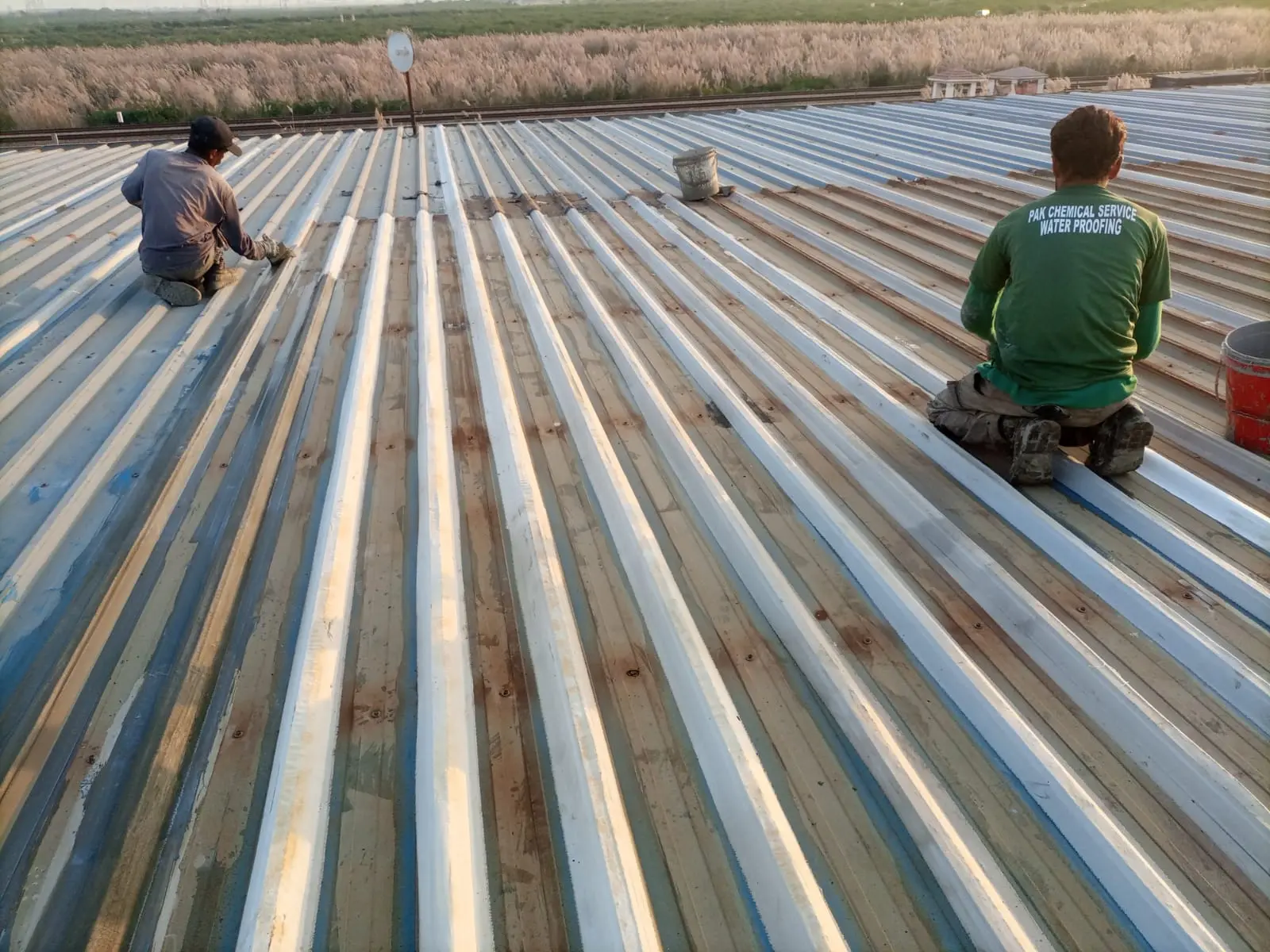
GI Sheet Joint and Fastener Sealing

Side laps, end laps, ridge joints, screw heads, washers, flashing joints, corners and service openings are inspected and treated according to their condition. Where movement is expected, the sealing material must accommodate that movement. A rigid filler around a flexible metal joint can crack or separate, and damaged fasteners should be physically checked rather than simply covered.

• SURFACE PREPARATION

Rust Treatment Before GI Sheets Waterproofing

Preparation may include cleaning debris, removing loose rust and unstable paint, cleaning joints, removing failed sealant, preparing exposed metal and treating previous repair areas. Severely corroded or perforated sheets may require replacement or metal repair first. A coating should never be used to hide metal that no longer provides a stable substrate.

• WORKFLOW

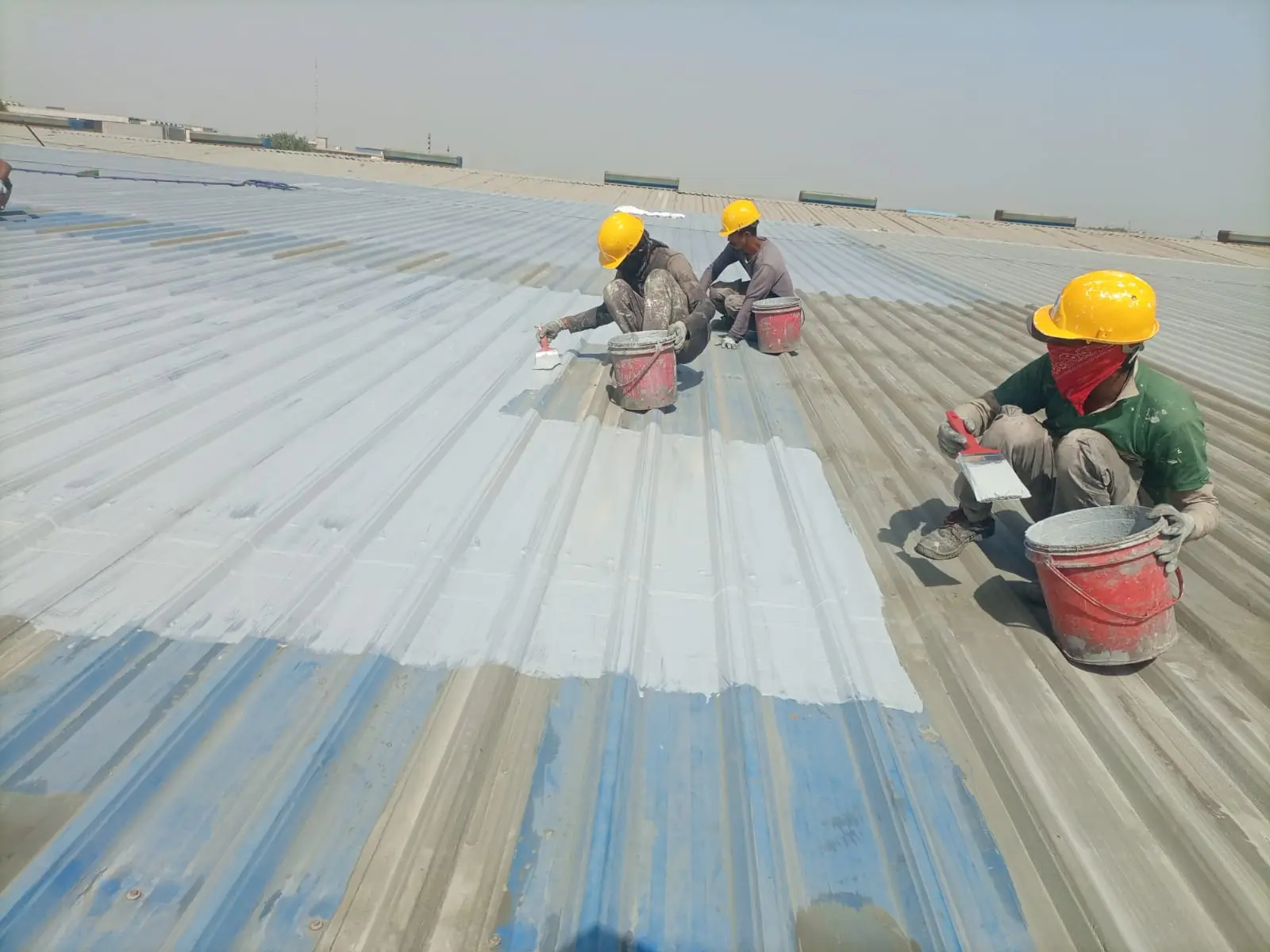
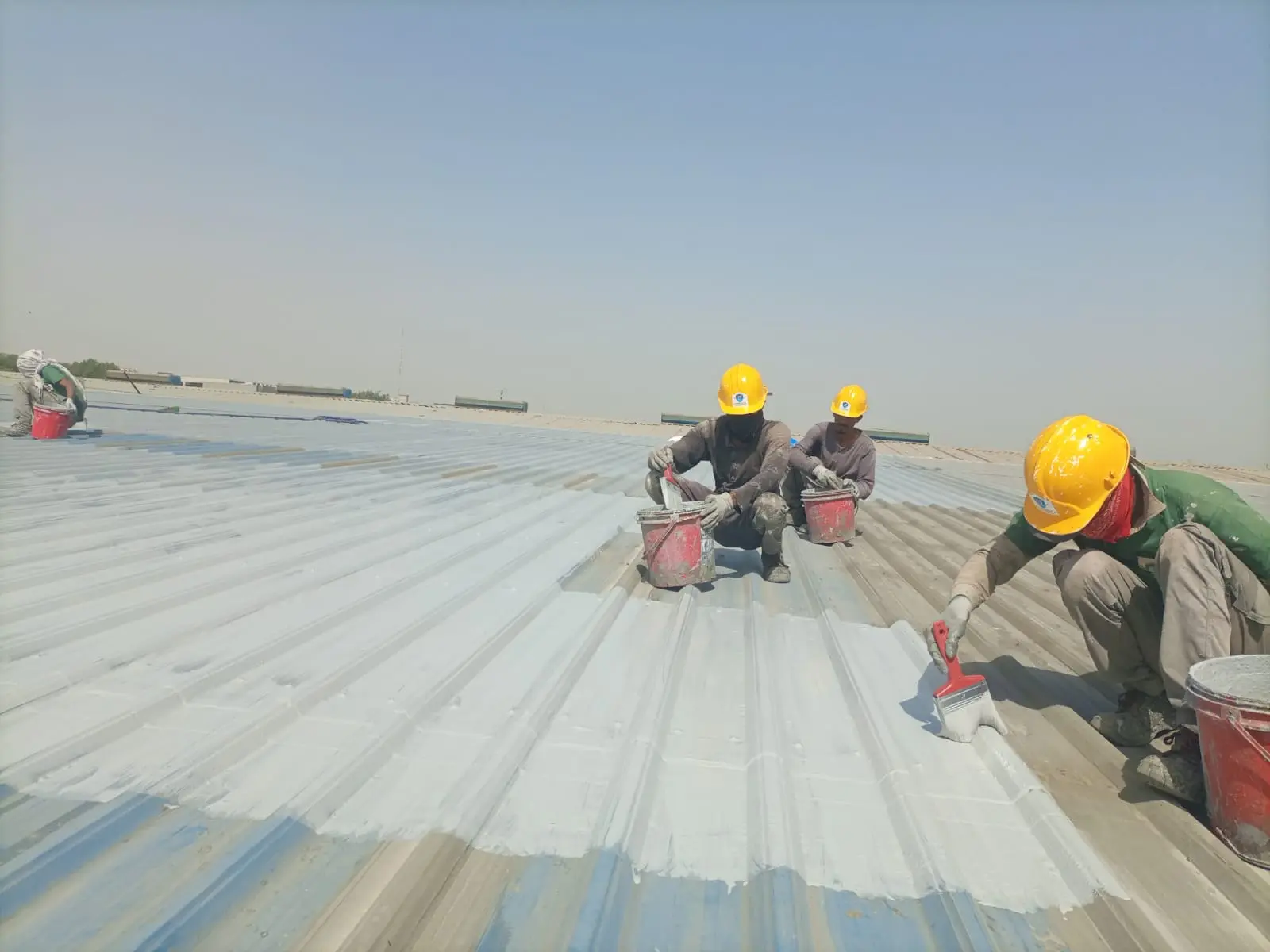
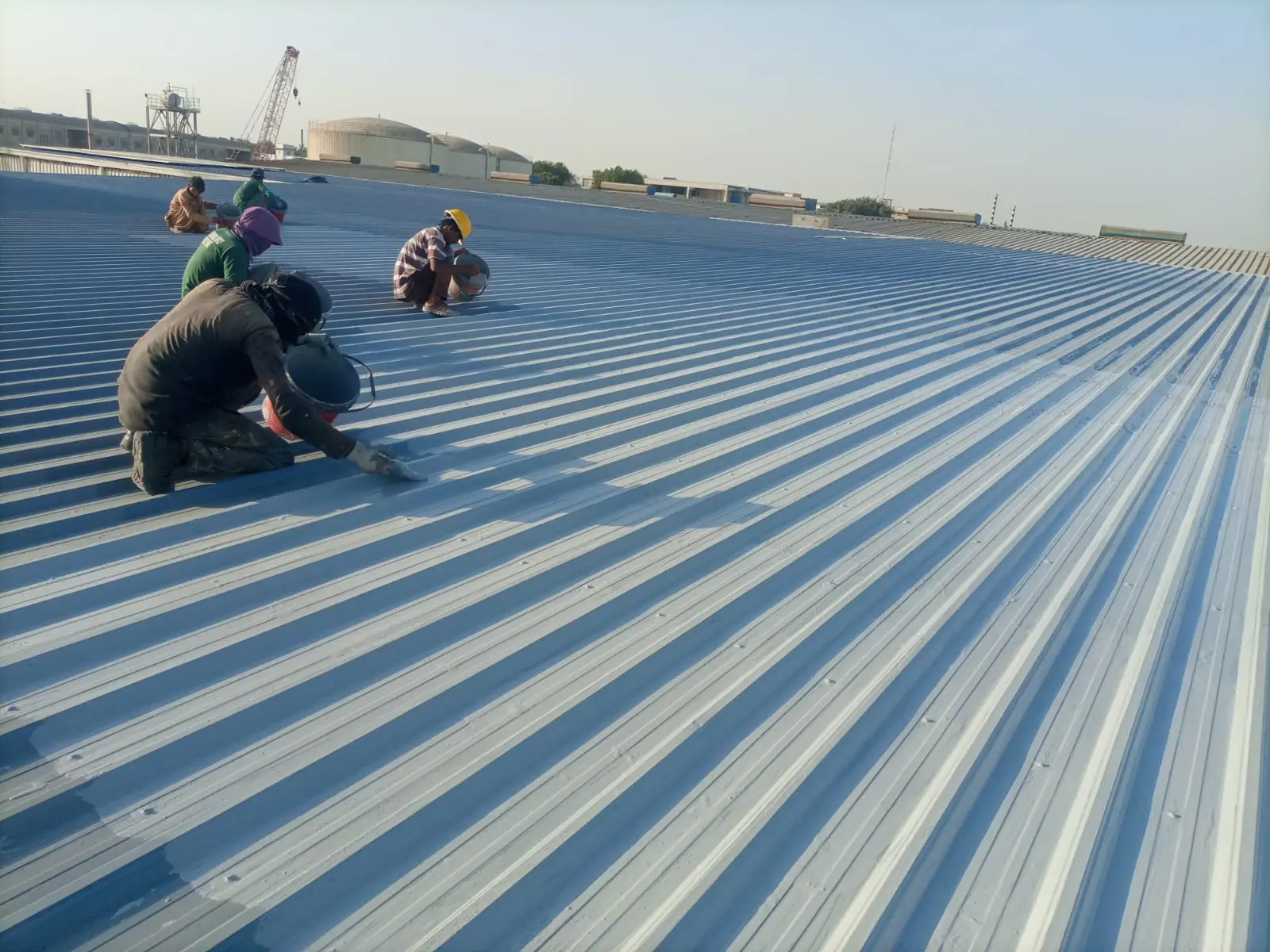
Our GI Sheets Waterproofing Process

Every treatment sequence is matched to roof condition, metal movement, corrosion and exposure.

01

Roof Inspection

We review sheet condition, corrosion, overlaps, ridges, fasteners, washers, flashing, edges, penetrations, coatings, repairs, holes and internal leakage areas.

02

Leakage Source Assessment

Likely entry points are identified across laps, fasteners, ridges, corrosion, flashing, penetrations and failed repairs. A complete coating is not assumed automatically.

03

Surface Preparation

Dirt, loose rust, unstable coating, failed sealant and incompatible material are cleaned or removed to create a stable bonding surface.

04

Localized Roof Repair

Open joints, fastener holes, patch edges and suitable corroded areas are repaired. Severely damaged sheets may need replacement rather than coating alone.

05

Joint and Fastener Treatment

Side laps, end laps, ridges, screws, washers, flashing, corners and penetrations are treated with metal-compatible material suited to expected movement.

06

Waterproofing Application

The selected system is applied according to metal type, existing coating, surface condition, corrosion, movement, exposure, roof size and project needs.

07

Curing and Final Inspection

Curing follows material, temperature, humidity, weather, thickness and coat requirements. Coverage, joints, fasteners, edges, ridges and penetrations are checked.

• REPAIR DECISION

GI Sheets Waterproofing vs Sheet Replacement

Waterproofing May Be Suitable

When sheets remain generally sound, leakage is concentrated around joints, fasteners or penetrations, corrosion is limited, and old coating can be prepared properly.

Metal Repair May Be Required

Where localized holes, unstable patches, weak fixing points or selected damaged sections must be repaired before a waterproofing system is applied.

Sheet Replacement May Be Required

When large holes, widespread perforation, deformation or structural weakness prevents the roof from providing a stable substrate.

• PRACTICAL BENEFITS

Benefits of Professional GI Sheets Waterproofing

Results depend on roof condition, corrosion, movement, surface preparation and system selection. No treatment is presented as permanent or lifetime protection.

✓ Reduce rainwater entry✓ Seal sheet overlaps✓ Treat fastener leakage✓ Protect ridge joints✓ Address penetrations✓ Protect prepared metal✓ Reduce repeated patching✓ Protect building interiors✓ Extend use of sound sheets
• QUOTATION FACTORS

GI Sheets Waterproofing Cost in Karachi

Cost depends on roof area, GI sheet type, corrosion level, fasteners, open joints, ridge and flashing condition, penetrations, existing coating, previous repairs, surface preparation, local metal repair, selected system, treatment layers, access, building height and site conditions. A large maintained roof may require less repair than a smaller roof with extensive corrosion, so inspection is more reliable than a fixed square-foot rate.

• WHY PCS

Why Choose Pak Chemical Services?

Pak Chemical Services follows an inspection-led approach to GI Sheets Waterproofing Services in Karachi. We inspect the full roof, identify leakage points, check overlaps, fasteners, corrosion, ridges, flashing and penetrations, prepare the metal surface, select treatment by condition, follow curing requirements and complete a final inspection. Severely damaged sheets are not hidden beneath coating when repair or replacement is necessary.

• SUITABLE PROPERTIES

GI Sheets Waterproofing for Different Properties

✓ Factories✓ Warehouses✓ Workshops✓ Industrial sheds✓ Commercial buildings✓ Storage facilities✓ Production units✓ Logistics buildings✓ Temporary structures✓ Construction facilities✓ Covered work areas✓ Metal-roofed utility buildings
• SERVICE AREAS

GI Sheets Waterproofing Services Across Karachi

Customers can share roof photographs, leakage videos, rusted-sheet images, fastener details, ridge areas, penetrations and previous repairs through WhatsApp for an initial discussion. Physical inspection may still be required before confirming scope and quotation.

✓ SITE Area✓ Korangi✓ Landhi✓ Bin Qasim✓ Port Qasim✓ North Karachi Industrial Area✓ DHA✓ Clifton✓ Gulshan-e-Iqbal✓ Gulistan-e-Johar✓ Saddar✓ Nearby Karachi locations
• RELATED PCS PAGES

Related Waterproofing Services

Explore relevant PCS services or request an inspection.

• QUESTIONS ANSWERED

Frequently Asked Questions About GI Sheets Waterproofing

Why does a GI sheet roof leak?

Common causes include open sheet overlaps, loose fasteners, deteriorated washers, corrosion, ridge defects, damaged flashing and poorly sealed penetrations.

Can rusty GI sheets be waterproofed?

Some corroded sheets can be prepared and treated when the metal remains sound. Severely perforated or weakened sheets may require replacement first.

Can leaking roof screws be sealed?

Fastener leakage can often be treated after the screw, washer, hole and surrounding sheet condition are inspected.

Can GI sheet overlaps be waterproofed?

Yes. Suitable sheet overlaps can be prepared and sealed according to their condition and expected movement.

Does the whole roof need coating?

Not always. Localized leakage may only require selected joint and fastener treatment, while widespread deterioration may require broader treatment.

Can old roof paint be waterproofed over?

It depends on its condition and compatibility. Loose or unstable paint should normally be prepared or removed before treatment.

Is GI sheet waterproofing the same as RCC roof waterproofing?

No. GI sheet roofs are metal systems with movement, corrosion, fasteners and sheet joints that require different assessment.

Can badly rusted sheets be repaired with waterproof coating?

Not always. Severely weakened or perforated sheets may need metal repair or replacement.

Can ridge leakage be repaired?

Ridge leakage may be treated where the ridge cap and supporting sheets remain suitable for repair.

How long does GI sheet waterproofing take?

Duration depends on roof area, corrosion, joint repairs, preparation, weather, system type and curing requirements.

How much do GI Sheets Waterproofing Services in Karachi cost?

Cost depends on roof area, corrosion, fasteners, joints, preparation, access and the selected waterproofing system.

Do you inspect the roof before quotation?

Yes. Inspection helps determine whether the roof needs localized repair, broader waterproofing or sheet replacement in selected areas.

• GET IN TOUCH

Request a GI Sheet Roof Inspection in Karachi

Leakage can affect machinery, electrical systems, stored products, insulation and internal finishes. Treating only the visible drip point may not address the actual roof defect.

Contact Pak Chemical Services for professional GI Sheets Waterproofing Services in Karachi. Share your location, approximate roof area, photographs, leakage images or videos, corrosion details and previous repair information to request an inspection and quotation.