Concrete and RCC Roof Cracks
Shrinkage, thermal movement, settlement, weak screed, construction movement, aging and failed repairs can produce stable or moving cracks. Width, depth, location and movement guide treatment.
Inspection-led waterproofing for RCC and concrete slab roofs affected by cracks, seepage, ponding and failed coatings.
Concrete and RCC slab roofs can leak through cracks, construction joints, parapets, drains, service penetrations and deteriorated waterproofing. Pak Chemical Services provides professional Slab Roof Waterproofing in Karachi for residential, commercial and industrial properties affected by damp ceilings and rainwater penetration.
Moisture may travel through screed, concrete and joints before appearing below. We inspect the complete roof, drainage, cracks, previous repairs and internal damp areas before deciding whether localized repair or broader treatment is required.
Professional Slab Roof Waterproofing in Karachi begins by identifying the likely water-entry path instead of coating the entire roof without assessment. The concrete, screed and existing coating are reviewed to determine whether failure is localized or widespread.
Leakage timing can provide useful clues: water after prolonged rainfall may follow a different path from leakage that begins immediately.
Shrinkage, thermal movement, settlement, weak screed, construction movement, aging and failed repairs can produce stable or moving cracks. Width, depth, location and movement guide treatment.
Separate concrete pours can create joints that leak when bonding is weak, cracks open, movement continues or earlier repairs fail.
Cracks, failed sealant, damaged plaster and weak waterproofing continuity at vertical-horizontal connections can allow water to travel below the surface.
Cracked drain edges, poor membrane connection, fitting movement, weak slope, ponding and failed sealant may need drainage correction as well as waterproofing.
Water pipes, conduits, AC lines, solar supports, vents and utility openings can become recurring leakage points when surrounding sealing fails.
Poor preparation, underlying cracks, loose concrete, incompatible materials, UV exposure, ponding, movement and later construction damage can destabilize old coatings.
RCC roofs require attention to concrete cracks, screed, construction joints, parapets, drains, penetrations, previous coatings and surface deterioration. A sound roof with localized joint leakage needs a different scope from an older roof with widespread cracking and coating failure.
Flat roofs retain water where slope or drainage is inadequate. Low points, drains, corners, parapets, openings, joints and ponding zones must be reviewed because waterproofing alone cannot correct every serious drainage problem.
Hairline and wider cracks, construction joints, wall-roof connections, screed cracks, penetration gaps and failed repairs are assessed individually. Localized repair may suit a stable defect, while widespread or moving cracks require broader assessment. Significant structural cracking may require a qualified engineer before waterproofing proceeds.
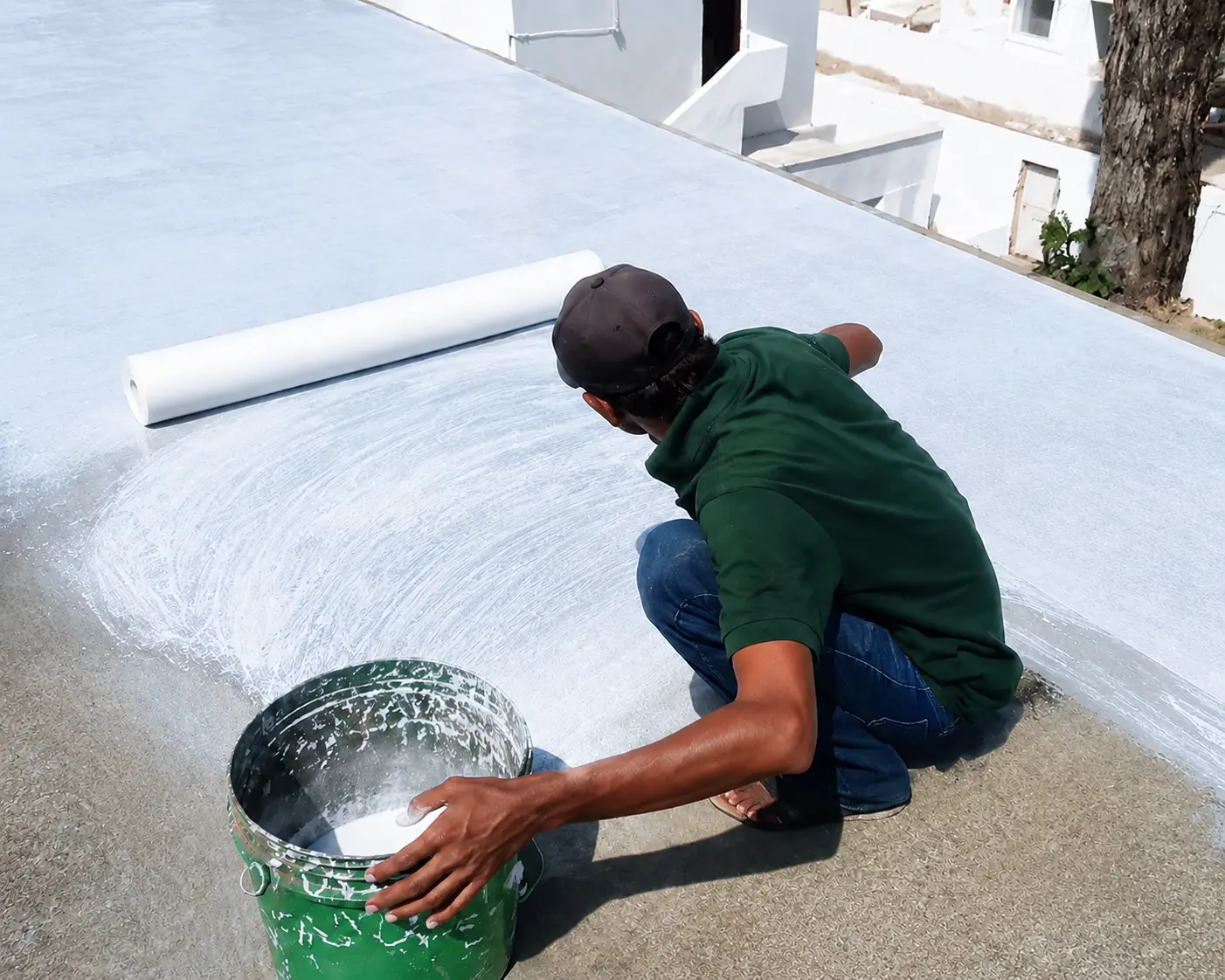
Preparation may include cleaning, removing loose concrete or weak screed, removing failed coatings, opening and preparing cracks, cleaning joints, and preparing parapets, drains and service penetrations. A new layer should not be applied over an unstable or contaminated surface.
We review RCC condition, cracks, joints, screed, parapets, drains, penetrations, ponding, coatings, repairs and internal dampness.
Cracks, stains, drainage, parapets, previous work, timing and surface deterioration are compared to identify likely paths.
Loose material, unstable coatings and failed sealant are removed while cracks, joints, drains and selected concrete defects are prepared.
Treatment is selected according to crack width, condition, movement, location, substrate and water exposure.
The chosen system reflects RCC condition, existing coating, roof use, movement, exposure, drainage and project requirements.
Curing follows material, temperature, humidity, thickness, coat and weather needs. Coverage, cracks, joints, parapets, drains and penetrations are checked.
May suit one or a few stable cracks, a defective drain edge, one parapet junction or a limited penetration where most existing waterproofing remains sound.
May be required where several cracks and joints leak, coating has widely failed, surface deterioration is extensive or water appears in several locations.
Moving structural cracks, unstable concrete, serious slope problems or severely damaged substrate may need specialist assessment or repair first.
Older roofs may contain several coating layers, repeated repairs, weak screed, deterioration, open joints, ponding and damaged parapets. They can often be treated, but loose coatings, unstable concrete and failed repairs must be addressed first.
Performance depends on roof condition, preparation, movement, drainage and system selection. No treatment is presented as permanent or lifetime protection.
Cost depends on roof area, concrete and screed condition, crack quantity and type, construction joints, parapets, drains, penetrations, ponding, old waterproofing, preparation, concrete repair, selected system, treatment layers and access. Inspection is more reliable than fixed square-foot pricing.
Pak Chemical Services follows an inspection-led approach for Slab Roof Waterproofing in Karachi: checking the full slab, leakage paths, RCC cracks, construction joints, parapets, drains, penetrations and old waterproofing, then preparing the surface, selecting treatment by condition, following curing requirements and completing final inspection.
Customers can share roof photographs, leakage videos, crack images, drain and parapet condition and previous waterproofing details through WhatsApp. Physical inspection may still be required before confirming scope and quotation.
Common causes include cracks, construction joints, failed waterproofing, parapet defects, drains, penetrations and deterioration.
Many old roofs can be treated after inspection and preparation when the substrate remains suitable.
Stable cracks can often be repaired. Significant or moving cracks may require further assessment.
Not always. Some roofs need localized treatment, while widespread failure requires broader waterproofing.
It depends on condition and compatibility. Loose or unstable material may require removal first.
Yes, depending on the parapet junction, cracks and existing waterproofing detail.
Yes, after the drain, surrounding concrete and waterproofing connection are inspected.
Ponding increases exposure at cracks and weak systems. Drainage and slope should be reviewed.
Duration depends on roof area, preparation, repairs, system, weather and curing requirements.
Cost depends on roof area, cracks, joints, drains, condition, preparation and selected system.
Yes. Inspection helps determine whether localized repair or broader treatment is required.
No. Exposed concrete slabs and tiled roofs have different surfaces, joints and treatment needs.
Water entering through an RCC slab can affect ceilings, paint, walls, electrical work and interiors. Treating only the visible damp patch may not address the roof defect.
Contact Pak Chemical Services for professional Slab Roof Waterproofing in Karachi. Share your location, roof area, photographs, leakage videos, crack details, drains, parapets and previous waterproofing information.